
Last updated October 17, 2026
 Metal roofing
 Architectural shingles
 Tile roofing
 GAF
GAF Owens Corning
 Flat & low-slope
Free roof inspection with deck photos before we talk money - GAF and Owens Corning certified installation
Seasonal Roofing Care for San Jose: Year-Round Homeowner’s Guide
The roof damage San Jose homeowners call about in December usually started forming in August. Thermal cycling in a dry attic above 130°F degrades adhesive strips on shingles and loosens mortar on ridge caps months before the first raindrop finds the gap. This guide-along with The Complete Guide to Roofing in San Jose-restructures the roofing calendar around the two windows that actually matter in Santa Clara County: the pre-storm window in October and the post-storm assessment in March. You’ll learn what to check, what it costs to fix, and what you can safely ignore. For homeowners in San Jose, a disciplined seasonal routine costs less than one emergency repair.
Styles & brands we work with
Quick Answer
San Jose doesn’t have four distinct roofing seasons. It has two critical transition windows: a pre-storm inspection window in October and a post-storm assessment window in March, separated by a long dry-heat period from June through September that causes slow thermal and UV damage on south and west roof exposures. A disciplined homeowner checks five specific points in October, documents condition with photos in March, and addresses tree canopy issues year-round.
Table of Contents
- Why San Jose Roofing Seasons Don’t Match the Calendar
- The Dry-Heat Damage Window: June Through September
- The October Pre-Storm Window: The Five-Point Inspection
- Diablo Winds: The Highest Single-Day Claim Volume in San Jose
- The March Post-Storm Assessment: What to Document and Why
- Tree Canopy Over a San Jose Roof: A Year-Round Moisture Trap
- What Seasonal Roof Care Costs in San Jose
- Common Mistakes to Avoid
- When to Call a Professional
- Frequently Asked Questions
- The Bottom Line
Why San Jose Roofing Seasons Don’t Match the Calendar
Most roofing guides are written for climates with four seasons. San Jose has two seasons that matter for a roof: the wet season from November through April, and the dry-heat season from May through October. The damage from one season shows up in the other.
Here’s what that means in practice. A shingle that fails during a January storm didn’t fail in January. It lost its adhesive bond in August, when attic temperatures in neighborhoods like Willow Glen, Almaden Valley, and Evergreen routinely push past 130°F. The asphalt in the shingle’s adhesive strip softened and re-hardened dozens of times. Each cycle weakened the bond slightly. By the time rain arrived, the shingle was held on by gravity and hope.
This is why we structure seasonal care around transition windows rather than calendar seasons. The October window catches damage before rain exposes it. The March window documents what the rain did so you can file an insurance claim with evidence, or schedule repairs before the next dry-heat cycle accelerates the problem. Everything else is maintenance between those two checkpoints.
For a deeper look at how we approach roof health across San Jose’s climate zones, see our Brennan Roofing Co San Jose home page.
The Dry-Heat Damage Window: June Through September
San Jose’s dry summer heat is not passive. It is actively dismantling your roof through three mechanisms that work together.
Thermal shock. A roof surface in San Jose can swing from 50°F at dawn to 150°F by mid-afternoon in July. That’s a 100-degree swing in eight hours. Asphalt shingles expand and contract with every cycle. Over hundreds of cycles per summer, the expansion stresses the mat material inside the shingle. Hairline cracks form. Water finds them later.
UV oxidation. The sun’s ultraviolet radiation breaks down the oils in asphalt shingles. This is why shingle granules are embedded in the surface: they’re sacrificial armor against UV. As granules loosen and wash away over years, the asphalt beneath oxidizes faster. On south-facing roof planes in San Jose, this happens noticeably faster than on north-facing planes.
Adhesive bond failure. Modern asphalt shingles rely on heat-activated adhesive strips to seal each course to the one below. The first time a roof heats up after installation, those strips activate and bond. But repeated heating and cooling cycles above 130°F in the attic can re-soften the adhesive. When the roof cools, the bond is slightly weaker than before. After several summers, shingles near the eaves and rake edges may never fully re-seal.
What you can do during this window is limited and should be cautious. A visual check from the ground with binoculars is safe. Look for shingles that appear lifted, curled at corners, or out of plane. If you see more than a few on a south or west exposure, schedule an inspection before the October rain. Do not walk a hot roof yourself. The granules are softened by heat, and foot traffic strips them. Also, an asphalt roof surface at 150°F is a safety hazard.
If you suspect dry-heat damage, our Roofing Company in San Jose page explains what a professional assessment covers.
The October Pre-Storm Window: The Five-Point Inspection
October is the most important month on the San Jose roofing calendar. The first significant rain typically arrives between late October and mid-November. The weeks before that are your window to find and fix problems while the work is still cheap and the weather is dry.
Here is the five-point inspection we recommend every San Jose homeowner complete in October. It takes about 45 minutes from the ground and one trip into the attic.
- Shingle condition. From the ground or a ladder, scan each roof plane. Look for shingles that are cracked, curled, cupped, or missing entirely. Pay extra attention to south and west exposures, which take the most UV and thermal stress in San Jose. If more than roughly 5% of shingles show visible damage, plan for repair or replacement before the rain.
- Flashing condition. Flashing is the metal material that seals roof penetrations: chimneys, skylights, vent pipes, and roof-to-wall transitions. It is the most common failure point on any roof. Look for rust, lifted edges, separated caulk, or exposed fasteners. Flashing that has pulled away from the wall or pipe by even a quarter inch will leak under wind-driven rain.
- Debris on the roof. Leaves, pine needles, and branches trap moisture against the shingle surface. In San Jose’s wet season, a pile of wet leaves sitting on a roof plane becomes a damp blanket that holds water for weeks. Clear debris from valleys, behind chimneys, and around skylights. Use a leaf blower from the ground if you can; if you must go on the roof, work with a spotter and proper footwear.
- Gutters and downspouts. Clogged gutters overflow, and the overflow runs down fascia boards and behind gutter aprons. Over a wet season, this rots fascia, soffit, and the rafter tails. In San Jose, gutters also collect a surprising amount of dust and fine debris during the dry season, which bakes into a hardened crust by October. Clean them now, not after the first storm.
- Attic ventilation check. Go into the attic on a dry afternoon. Look for signs of moisture: dark staining on the underside of the roof decking, rust on nail points, or condensation on ductwork. Check that intake vents at the eaves and exhaust vents at the ridge are not blocked by insulation or nesting material. A poorly vented attic in San Jose hits 150°F in summer and traps moisture in winter. Both extremes shorten the life of a roof.
The cost-benefit math on this inspection is simple. Replacing a few damaged shingles and resealing flashing in October typically costs $200 to $500. The same damage left until after a storm can mean a water-damaged ceiling, insulation replacement, and drywall repair, which runs $1,500 to $4,000 or more. That’s not a scare tactic. We see this math play out every winter in San Jose.
If you find anything on this list you’re not certain about, get a professional inspection before the rain. Our Roof Inspection in San Jose page explains what we check and how we document findings.
Diablo Winds: The Highest Single-Day Claim Volume in San Jose
Most people assume rain causes most roof damage in San Jose. They’re wrong. The Diablo winds, those hot, dry offshore winds that blow from the northeast in fall and early winter, cause the highest single-day volume of roof claims we see all year.
The mechanism is simple. Diablo winds hit the Bay Area in gusts that routinely reach 40 to 60 mph, with ridgetop gusts sometimes exceeding 70 mph. In the hills east of San Jose, along the Calaveras and Diablo ranges, those gusts funnel into residential neighborhoods. The wind hits the roof’s windward slope, pushes under shingle edges, and lifts them. Once one shingle lifts, the wind gets under the next one. The failure cascades.
Three details determine whether a roof resists Diablo winds or loses shingles:
- Ridge cap integrity. The ridge caps are the shingles that cap the peak of the roof. They take the most direct wind load. If the ridge cap mortar or adhesive has degraded from summer heat, Diablo winds will find it. Ridge caps that were set in place with proper adhesive and mechanically fastened resist this. Ridge caps that were installed decades ago and never re-sealed won’t.
- Hip shingle sealing. Hip roofs shed wind better than gable roofs, but only when the hip shingles are fully sealed. A hip shingle that has lost its adhesive bond acts like a lever in high wind. The same rule applies to rake edges and eave edges: these are the first courses to lift.
- Starter strip fastening. The starter course is the first row of shingles along the eaves. If it was not fastened with the manufacturer’s specified nailing pattern and the adhesive strip was not fully activated at install, the entire first course is more vulnerable during wind events. This is a detail most homeowners never see, which is why installation discipline matters more than material brand on wind-exposed roofs.
After a major Diablo wind event in San Jose, do a quick visual check from the ground. Look for shingles on the ground, shingles folded over on the roof, or exposed underlayment. If you see any of those, call for repair immediately. A single lifted shingle becomes a water entry point at the next rain, and the longer it stays exposed, the more surrounding shingles fail.
For homeowners in wind-exposed areas like the East Foothills or Berryessa’s higher streets, choosing a shingle rated for high wind matters. Manufacturers including Owens Corning and Atlas make shingles rated for 110 mph and above. We walk through these options on our Roof Repair in San Jose page.
The March Post-Storm Assessment: What to Document and Why
By March, San Jose’s wet season is mostly done. The average rainfall for the season has fallen, and the remaining storms are typically lighter. This is the time to assess what the rain did to your roof and document it.
The key distinction to learn is normal granule loss versus accelerated wear. All asphalt shingles shed granules continuously, especially in the first year after installation. You’ll see granules in gutters and at downspout outlets. That’s normal. Accelerated wear looks different.
Here’s how to tell the difference:
- Normal granule loss: A thin, even dusting of granules in gutters. Roof surface still has a consistent color from the ground. No bare spots visible. No shingle edges curling.
- Accelerated granule loss: Deep piles of granules in corners of gutters. Visible color variation on roof planes, with darker patches where granules are thin. Exposed fiberglass mat on multiple shingles. Shingle edges that appear worn down or “fuzzy.” This indicates the shingle is nearing the end of its service life or was manufactured with a granule adhesion defect.
If you see accelerated wear, document it. This documentation serves two purposes: it supports an insurance claim if the wear resulted from storm damage, and it gives a roofer a baseline for a repair or replacement recommendation.
How to photograph your roof for documentation in March:
- Take wide shots of each roof plane from at least two angles. Use a smartphone with HDR enabled so both bright sky and dark roof are visible.
- Photograph each valley, chimney, skylight, and pipe flashing from a distance and close up. These are the highest-probability leak points.
- Photograph gutters with accumulated granules. Include a sense of scale: a coin or a familiar object in the frame helps.
- Go into the attic and photograph the underside of the roof decking. Any dark stains, water marks, or visible daylight through the decking are documented evidence of past or present leaks.
- Date-stamp the photos. Most smartphone photos carry metadata, but a simple handwritten note in one wide shot also works.
This documentation takes 30 minutes and costs nothing. If a dispute with an insurer or a contractor ever arises, dated photos from the March assessment are your strongest evidence. We see this repeatedly in San Jose: the homeowner with documentation gets a faster, fairer resolution.
If the March assessment turns up problems, don’t wait until October to address them. The dry-heat window from June through September will accelerate whatever damage the rain exposed. Our full Roof Repair in San Jose guide covers the repair process, pricing, and what to expect.
Tree Canopy Over a San Jose Roof: A Year-Round Moisture Trap
San Jose has a significant urban tree canopy, particularly in older neighborhoods like Rose Garden, Naglee Park, and Willow Glen. Mature oak, maple, and redwood trees overhanging roofs are common and often prized by homeowners. But a tree canopy over a roof is not just a fall leaf problem. It’s a year-round moisture trap.
Here’s what a tree canopy actually does to a roof:
- Leaf accumulation in valleys and behind chimneys. This is the obvious problem, but it’s worse than most people realize. A pile of leaves on a roof valley retains water for days after each storm. That standing moisture soaks into the shingle mat and accelerates granule loss in a concentrated area. Over a season, the valley shingles age several years’ worth of normal life.
- Branch contact and abrasion. A branch that touches the roof during dry weather scrapes the granule surface on windy days. A branch that touches during wet weather does the same, but with water present to carry granules away. Over months, branch contact creates a visible wear line on the roof surface. The fix is to trim the branch back, but the granule damage is permanent.
- Shade and moss. This is less common in San Jose than in foggy coastal areas, but north-facing roof planes under dense canopy in deep shade can grow moss and lichen. Moss holds water against the shingle surface constantly. It also lifts shingle edges as it grows. In the San Jose climate, moss is usually a sign that the roof plane never dries fully, which is itself a ventilation or canopy problem.
- Debris in gutters, year-round. Trees shed year-round in San Jose: leaves in fall, flowers in spring, seed pods and small branches whenever the wind blows. A gutter under a canopy clogs in weeks, not months. The overflow saturates the fascia and soffit.
The practical rule is this: if any branch overhangs the roof plane by more than a few feet, trim it back to at least 4 to 6 feet of clearance. If the canopy is dense enough that the roof never fully dries after rain, consider professional canopy thinning. And if you have a tree canopy over your roof, inspect your gutters monthly during leaf season rather than twice a year.
In our experience across San Jose, the homes with the cleanest roofs are not the ones with no trees. They’re the ones where the homeowner treats the tree canopy as part of the roof system and manages both together.
What Seasonal Roof Care Costs in San Jose
Homeowners should not have to call just to get a ballpark. Here are the price ranges we see for common seasonal roof care items in the San Jose market as of 2025.
- October pre-storm inspection (visual, ground and attic): $150 to $350, depending on roof size and access. Some roofers offer this free with a repair estimate. We include inspection findings in our written repair quotes.
- Minor shingle repair (5 to 10 shingles replaced): $250 to $600, depending on roof pitch, accessibility, and shingle match availability.
- Flashing reseal at one penetration (pipe boot, chimney corner, skylight edge): $150 to $400 per penetration when the flashing itself is sound and only the sealant has failed.
- Flashing replacement at one penetration: $400 to $900, depending on material (galvanized vs. copper) and roof complexity.
- Gutter cleaning (single-story, typical San Jose lot): $125 to $250. Two-story homes run $200 to $400.
- Moss treatment and removal on a shaded roof plane: $300 to $800, depending on square footage and whether soft-wash or manual removal is needed.
- Full roof replacement in San Jose (mid-grade architectural shingle, tear-off included): $14,000 to $28,000 for a typical 1,800 to 2,400 square foot home. Material brand and roof complexity move the number.
These are ballpark figures. Your roof’s actual price depends on pitch, height, material, and condition. What should not vary is whether the price is in writing before work starts. It should be. Every estimate from Brennan Roofing Co San Jose includes a written price before any work begins, always, with no exceptions. That’s the Garrison Standard.
Common Mistakes to Avoid
- Waiting for a leak to call. By the time water shows up on a ceiling, the leak has been active for days or weeks. The repair is more expensive, and the drywall and insulation damage is extra. Seasonal discipline is cheaper than leak response.
- Ignoring the south and west roof planes in summer. The side of the house that faces the sun is aging faster than the rest. Most homeowners never check it until a problem shows up. Check it first, not last.
- Cleaning gutters only in fall. Under a San Jose tree canopy, gutters clog year-round. Neglect the spring cleaning and you’ll have overflowing gutters before the leaves even fall.
- Walking on a hot roof to inspect it. That 150°F surface is a burn hazard, and foot traffic on hot asphalt shingles strips granules. Inspect from the ground or call a professional. A real inspector knows how to walk a hot roof safely and knows when not to walk it at all.
- Skipping the attic part of the inspection. Half the evidence of roof problems is in the attic. Stains, rusted nails, and daylight pinholes tell the story before the leak becomes visible inside the house.
- Assuming the cheapest repair quote is the honest one. A low-ball repair doesn’t stay low for long. When the fix fails, you pay twice: once for the work and once for the water damage. A written price that doesn’t move at the door is worth more than a discount.
When to Call a Professional
Some roof work is safe for a homeowner to assess. Some is not. Call a professional when you see lifted or missing shingles after a wind event, when you find water stains in the attic, when flashing has pulled away from a penetration, or when the roof is steep enough that walking it feels uncertain. High-pitch roofs, two-story eaves, and any work near power lines are not DIY territory. The cost of a fall or an electrical contact dwarfs any money saved. In San Jose, a roof inspection costs less than most people assume. Brennan Roofing Co San Jose offers free estimates in San Jose, call (669) 238-2101.
Frequently Asked Questions
Twice a year: once in October before the rain starts, and once in March after the wet season ends. If you have a tree canopy over your roof, add a quick visual check after any major wind event.
A visual inspection from the ground and attic typically costs $150 to $350 in San Jose. Some companies include the inspection cost in the repair estimate if you proceed with the work. Ask the roofer whether the inspection fee is credited toward repairs before you book.
Late spring through early fall. The dry weather gives roofers a reliable window for a clean tear-off and install. Replacing a roof in mid-winter is possible but riskier: underlayment and shingles don’t seal as well in cold, wet conditions. If you need a replacement and it’s already October, scheduling for the next dry window is usually smarter than rushing before the rain.
If you see lifted or missing shingles after a wind event, exposed underlayment, or water stains in the attic that appeared after a storm, document everything with dated photos and call your insurer. A professional inspection report helps substantiate the claim. Don’t wait: most policies have time limits on storm damage claims.
Not necessarily. A thin, even layer of granules in gutters is normal, especially in the first year after installation. Deep piles of granules, visible color variation on roof planes, and exposed fiberglass mat indicate accelerated wear. When you see that pattern on multiple shingles, the roof is near the end of its service life and a replacement conversation is due.
It depends on the roof’s pitch and your comfort with height. On a low-slope single-story roof, re-sealing a couple of shingles with a manufacturer-recommended adhesive is a manageable weekend project for some homeowners. On a two-story roof or any pitch steeper than 6/12, call a professional. Falls from roofs are among the most common cause of homeowner injury. The tools and technique matter less than the risk assessment.
For exact pricing on any repair, call (669) 238-2101. Estimates are free, and the price is in writing before any work starts.
The Bottom Line
San Jose roofing care has two real seasons: prepare in October, assess in March. The dry-heat window between them is not a break from maintenance. It’s when the slow damage accrues. The homeowners who avoid emergency repairs are the ones who inspect on schedule, document what they find, and address small problems while they’re still small. The alternative is a December discovery that started on an August afternoon. Choose the schedule. Choose the written price. That’s the disciplined way to own a roof in San Jose.
Written by Travis Oakley, Owner at Brennan Roofing Co San Jose, serving San Jose since 2000.
See the difference
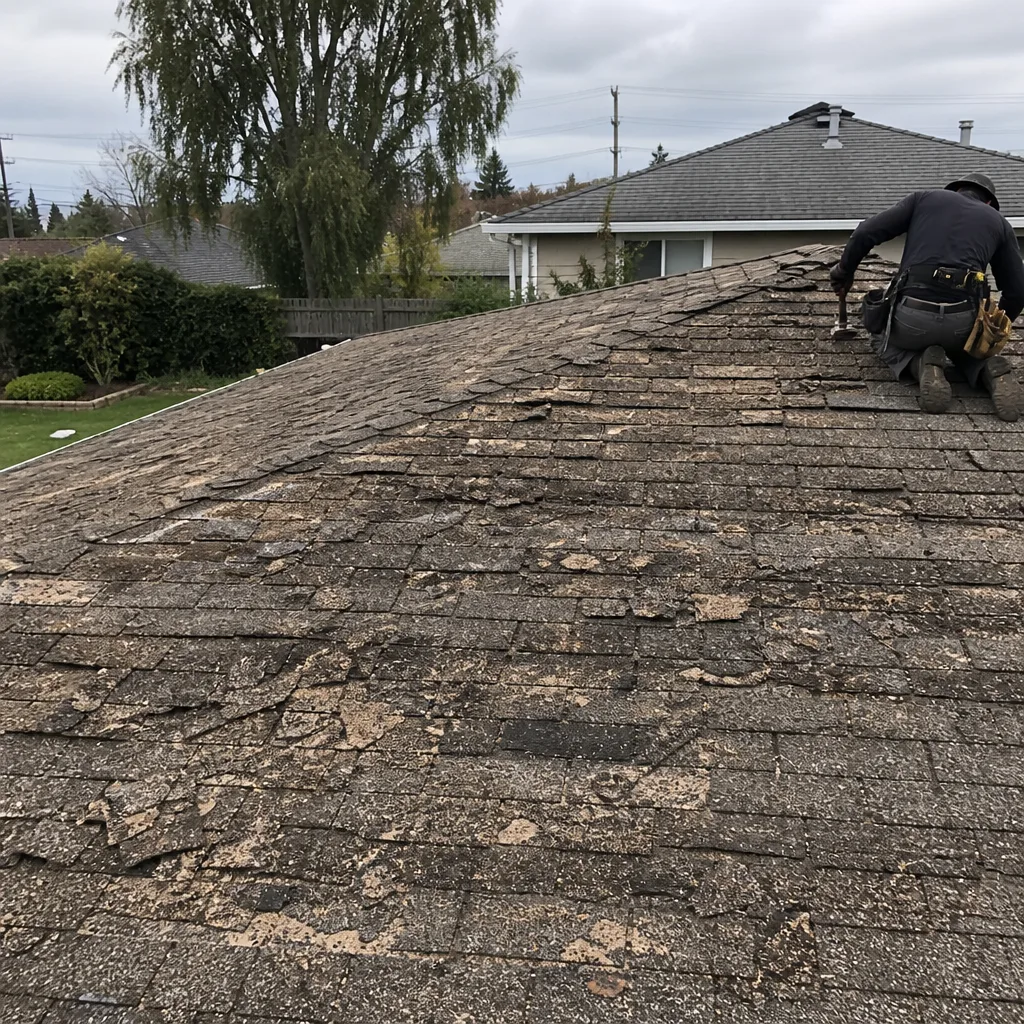 Before
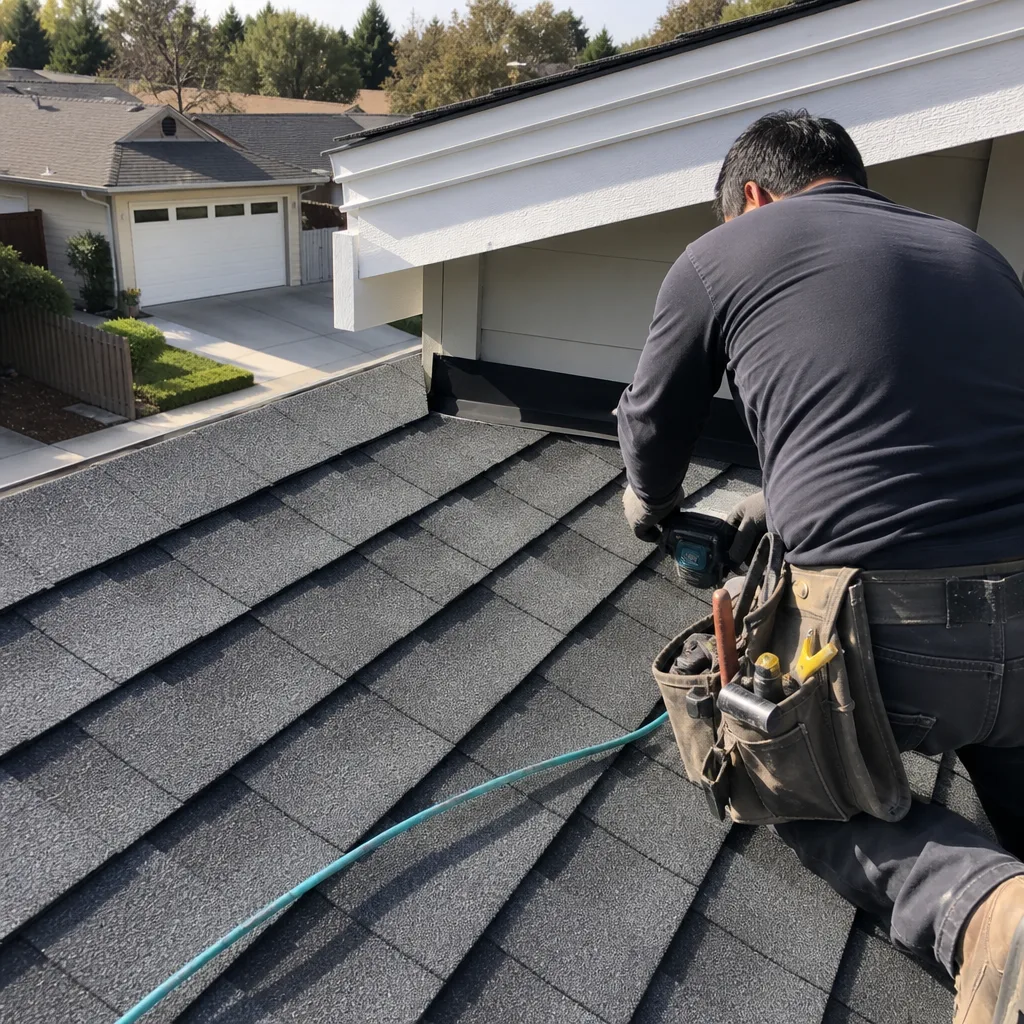 After
After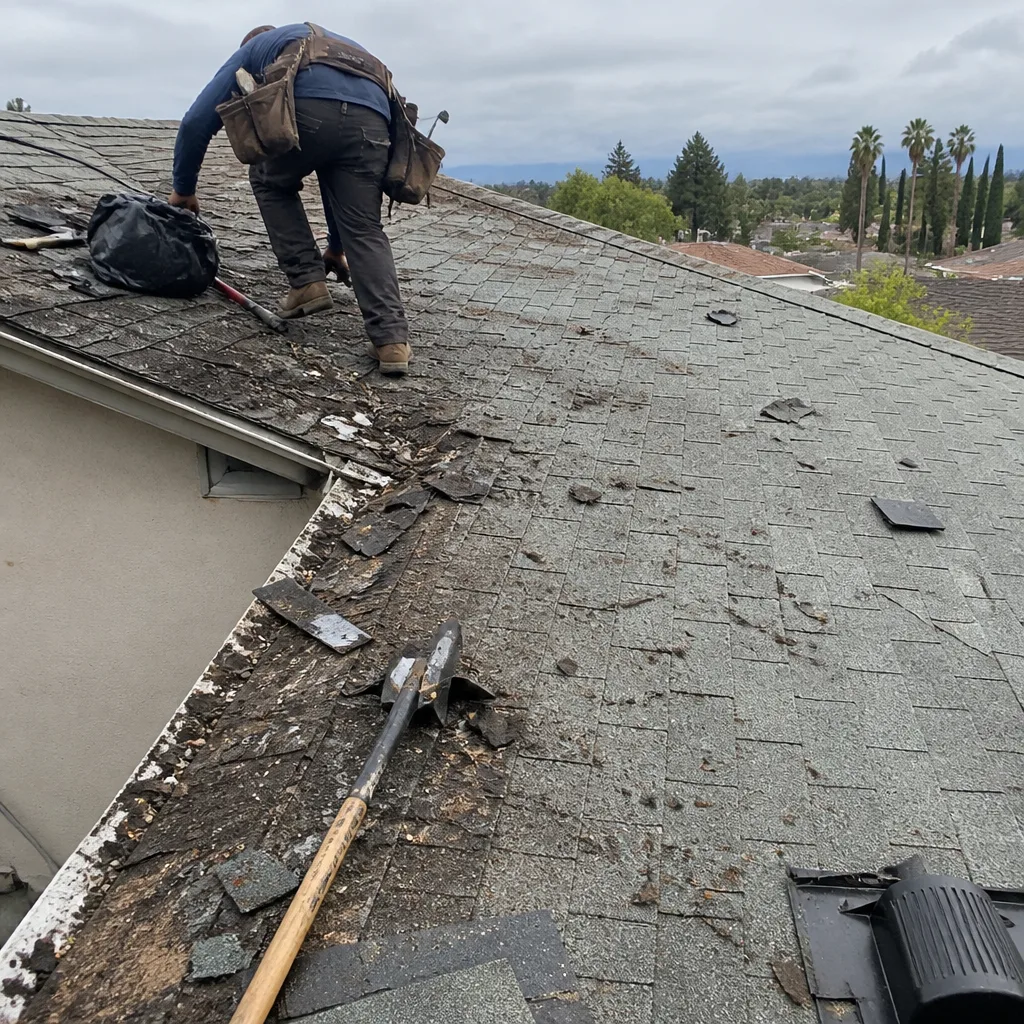 Before
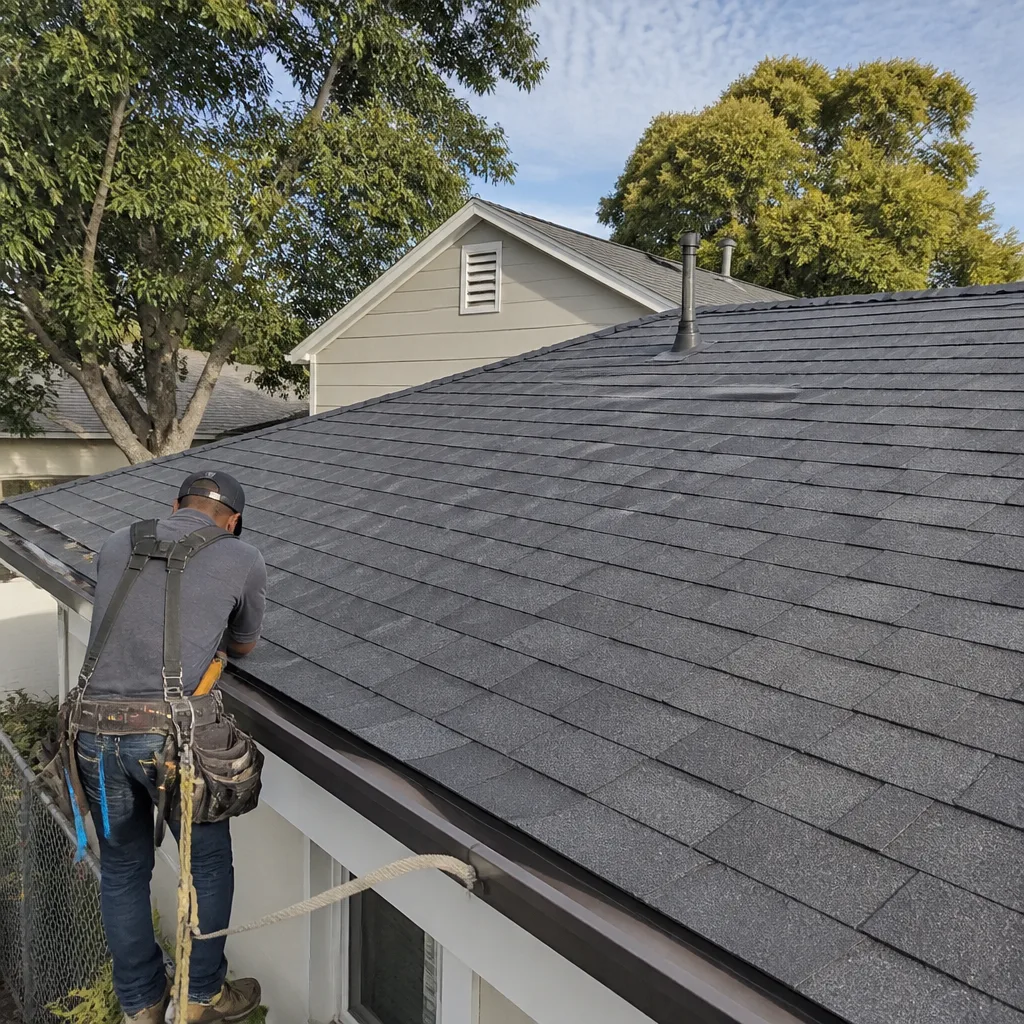 After
After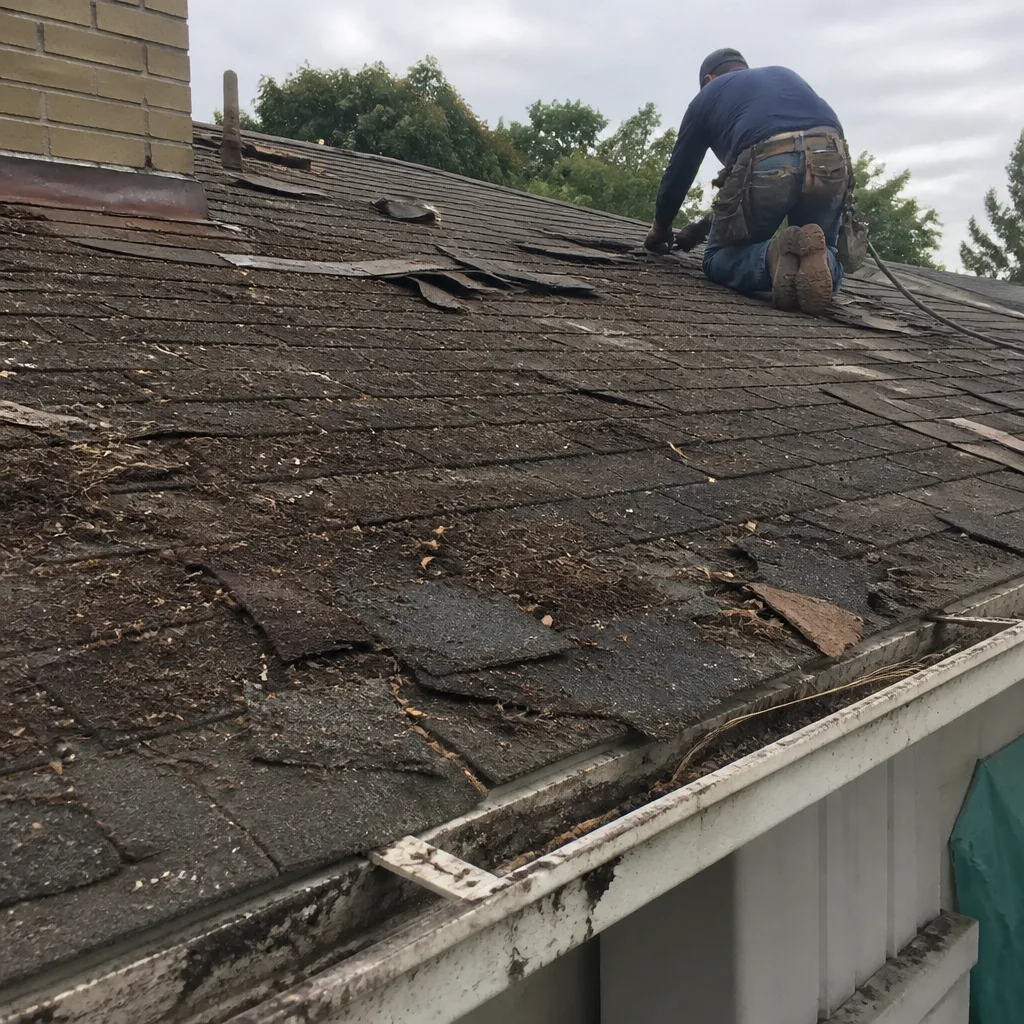 Before
 After
After