
 Metal roofing
 Architectural shingles
 Tile roofing
 GAF
GAF Owens Corning
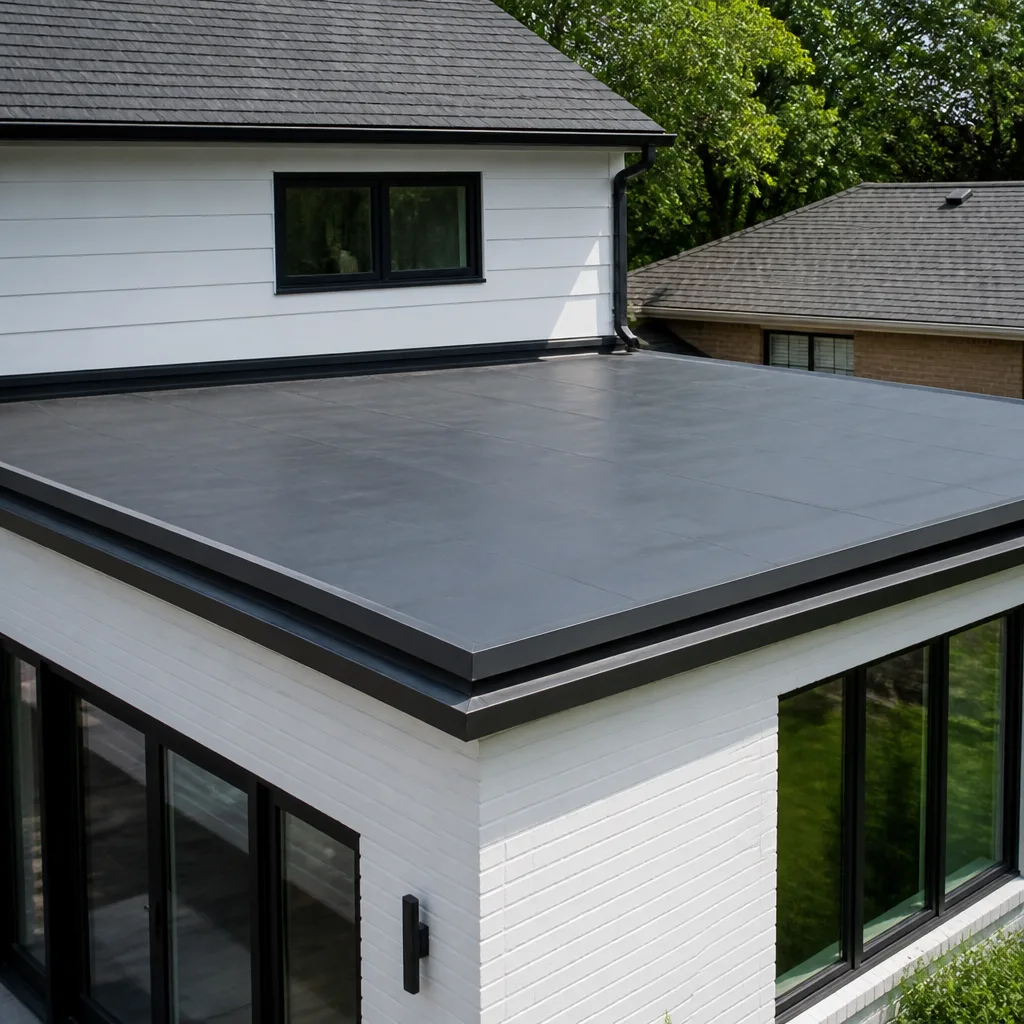 Flat & low-slope
Free roof inspection with deck photos before we talk money - GAF and Owens Corning certified installation
CertainTeed Flashing Replacement: The San Jose Owner’s Guide
CertainTeed flashing replacement in San Jose typically runs $350 to $900 installed, depending on whether we’re pulling shingles to reach the old flashing or replacing a visible pipe boot, valley, or step flashing. We stock CertainTeed-compatible flashing on our trucks, so most jobs are done in a single visit. If you’ve spotted water staining on a ceiling, curling shingles near a wall, or daylight coming through the roof decking around a pipe, the flashing has likely given out before the shingles did.
Flashing fails quietly. Most San Jose homeowners discover the problem after a winter storm works water past a cracked pipe boot or a lifted section of step flashing. Shingles can look fine while the metal underneath has been doing the real work for 15 or 20 years. When that metal gives up, the leak starts small, then finds its way into insulation, drywall, and framing.
Which CertainTeed Models This Applies To
This replacement guide applies to flashing paired with CertainTeed shingle lines including Landmark, Landmark Pro, XT 25, Presidential Shake, and Grand Manor, as well as CertainTeed’s Integrity Roof System components. The flashing itself is usually not branded CertainTeed in a way you’ll see from the ground. What matters is compatibility: gauge thickness, width, and material that works with the existing roof assembly.
Here’s the gotcha many San Jose owners run into. CertainTeed’s heavier architectural and designer lines, like Presidential Shake, create a taller profile at walls and valleys. Standard big-box step flashing at 2 inches of rise often doesn’t reach high enough behind the siding or stucco. We carry 4-inch and 5-inch rise step flashing for exactly this reason, along with kickout flashing for roof-to-wall transitions. If you have an older CertainTeed roof with 3-tab shingles, the decking underneath may predate current code, and we’ll match the flashing to what’s actually there, not what a catalog assumes.
We’re an independent service provider, not affiliated with CertainTeed, so our recommendation is based on what holds up in San Jose’s climate, not on pushing one brand. We also stock GAF and Owens Corning flashing profiles, so if your roof is a mix of materials, we can match accordingly.
Styles & brands we work with
Signs Your CertainTeed Flashing Replacement Is Failing
- Water staining on ceilings or walls after rain. This is the most common first sign. Flashing at chimneys, skylights, and walls channels water away from seams. When it fails, water pools behind the drywall, and the stain often appears feet away from the actual breach.
- Lifted or missing shingles at roof-to-wall transitions. Step flashing sits under each shingle course. High winds off the Santa Cruz Mountains can lift shingles enough to expose it. If you can see bare metal glinting where shingles meet a wall, water has a path in.
- Cracked or brittle pipe boot collars. The rubber collar around vent pipes bakes in San Jose sun year-round. After 10 to 15 years, it splits. The metal base may look fine while the rubber is silently letting water run down the pipe into your attic.
- Granules collecting in gutters near valleys. Valley flashing wears as shingle granules wash over it. If you’re seeing heavy granule loss in one valley, the flashing underneath is taking more UV and abrasion than it should.
- Daylight visible through roof decking in the attic. If you can see light coming through around a pipe or at a wall junction from inside the attic, the flashing has failed completely and water is getting in during every rain.
See the difference
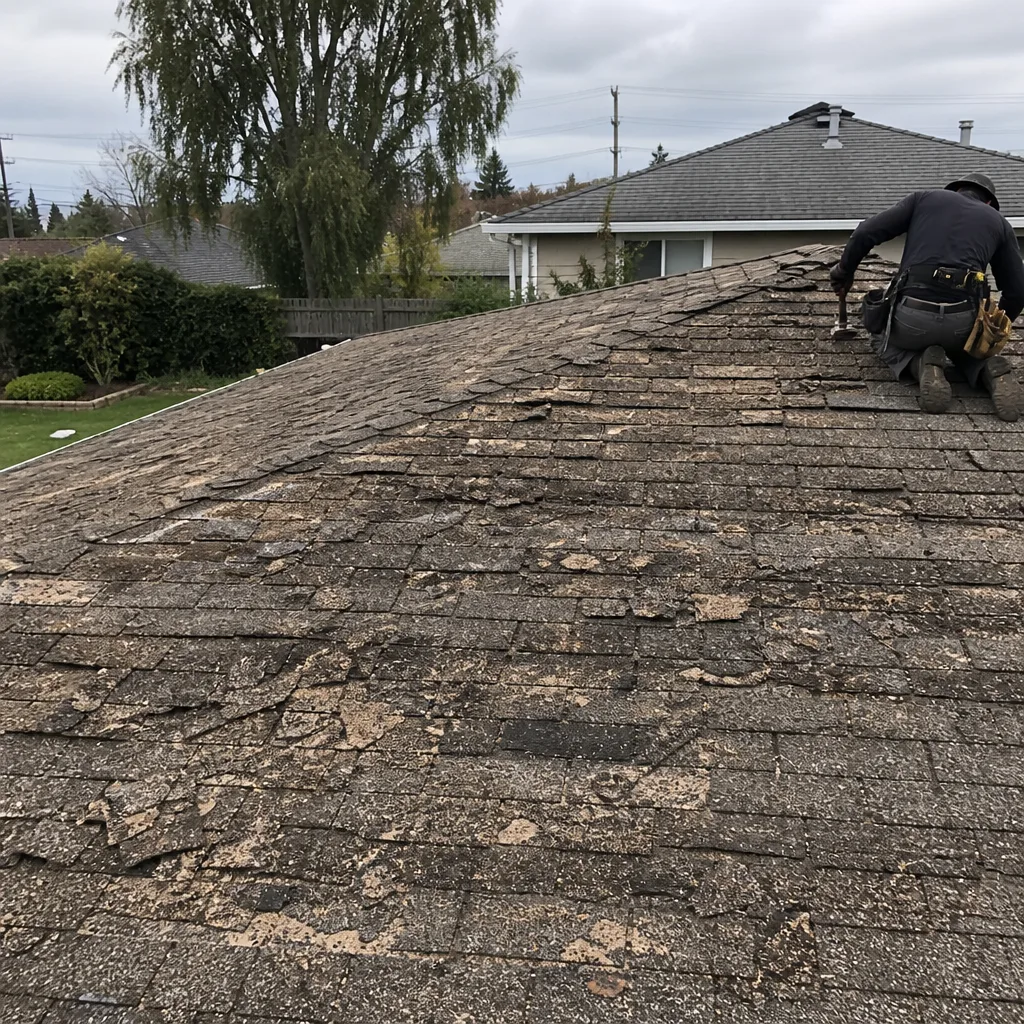 Before
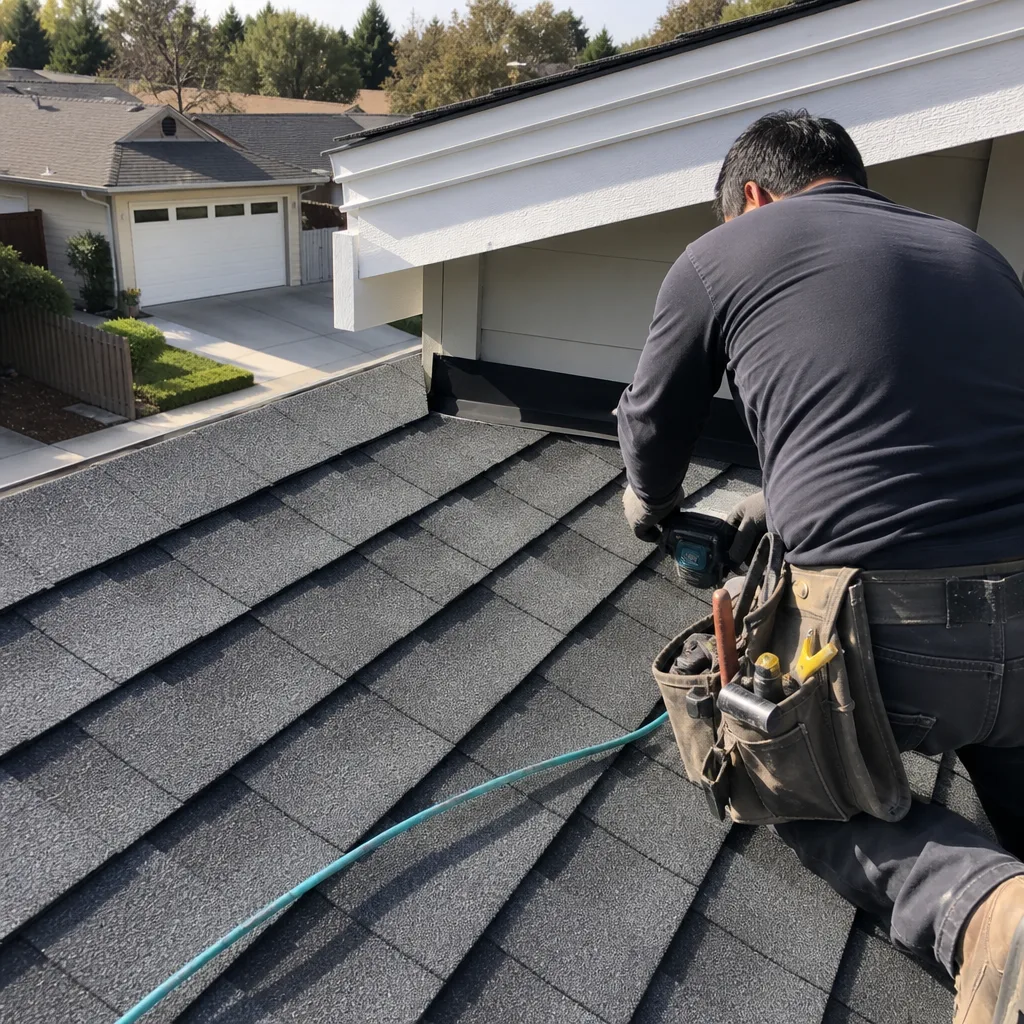 After
After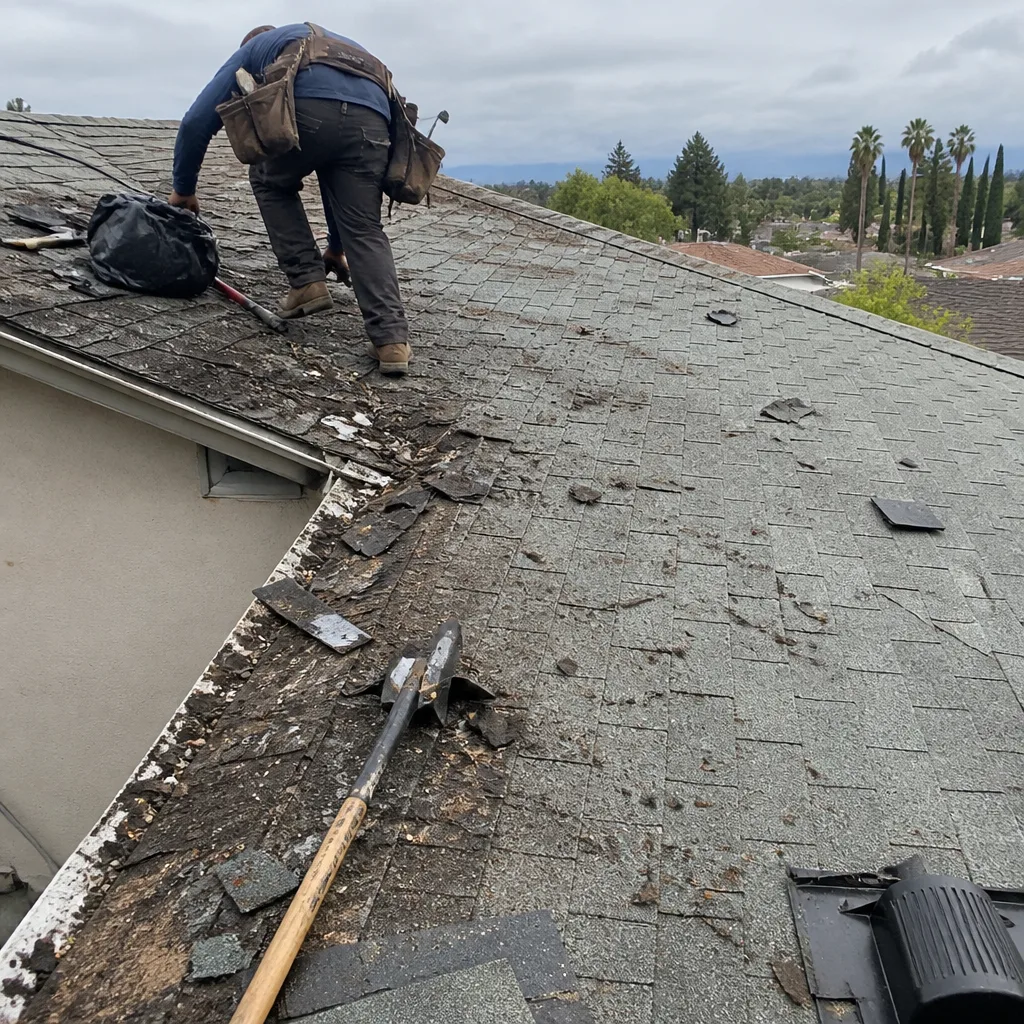 Before
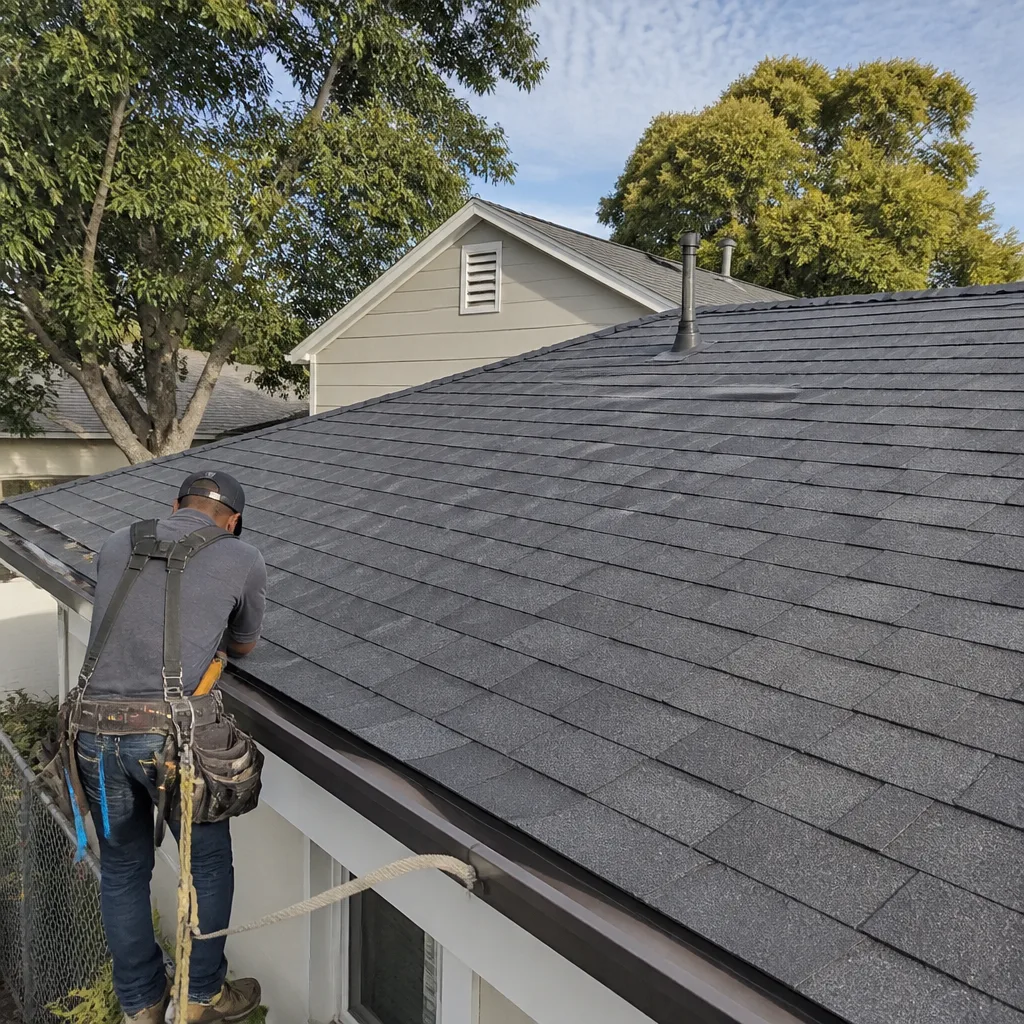 After
After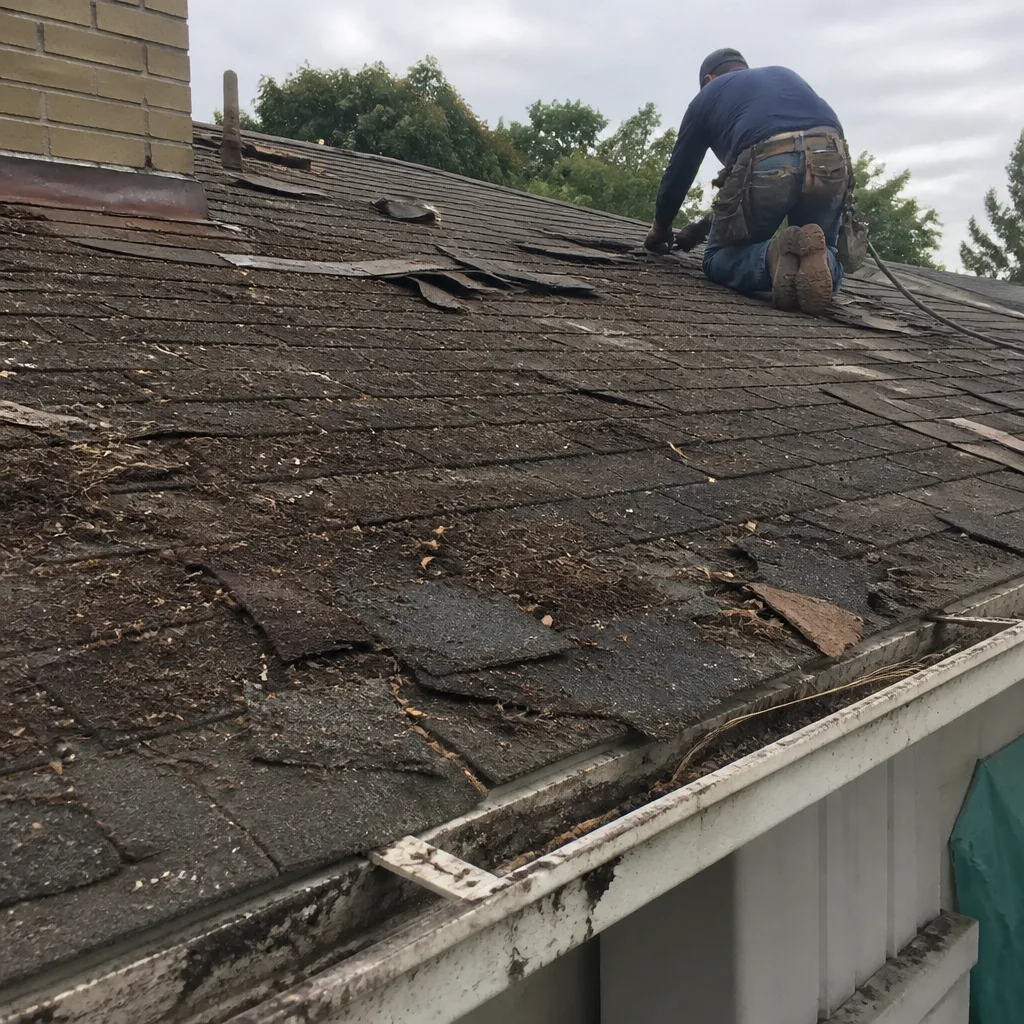 Before
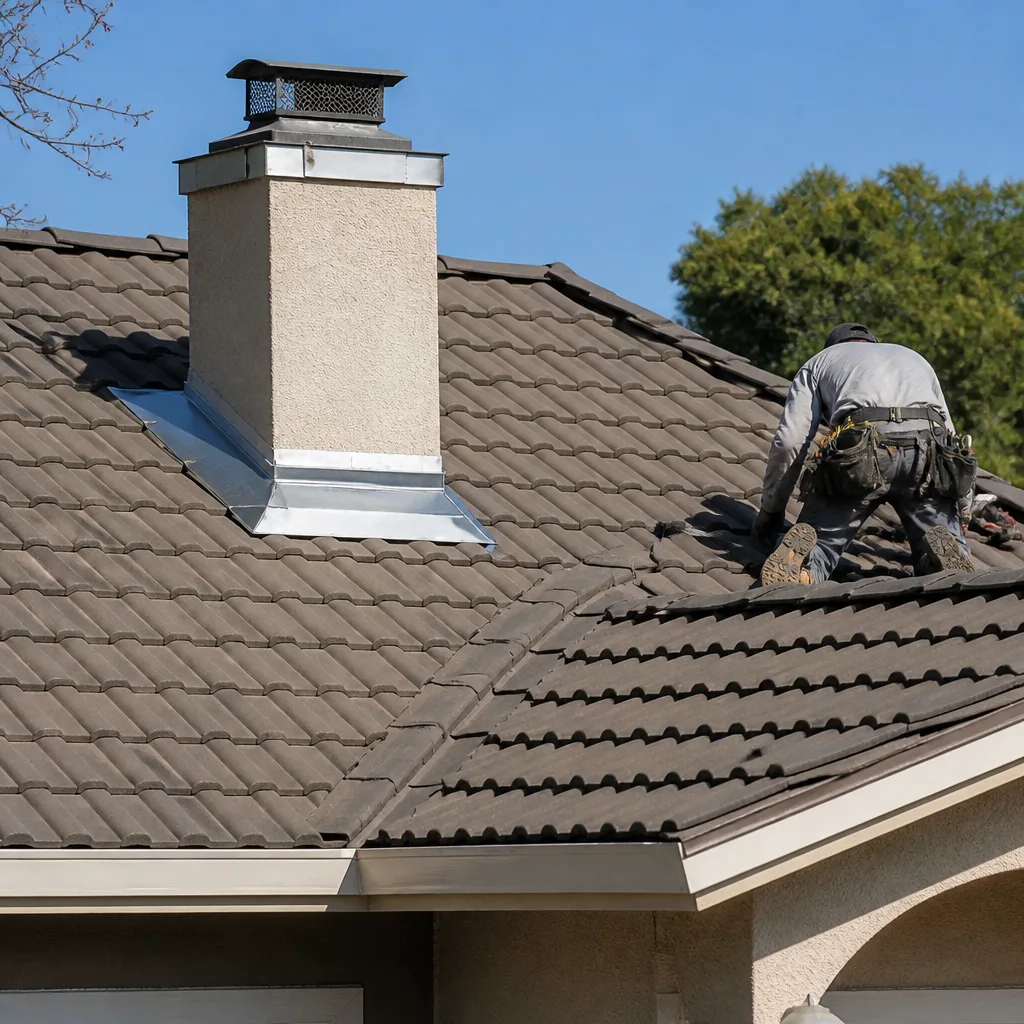 After
AfterReplacement Cost & What’s Included
In San Jose, you’ll pay roughly $350 to $500 to replace a single pipe boot flashing, $400 to $650 for a section of step flashing along a wall, and $500 to $900 for valley flashing replacement on a typical ranch or two-story home. The range comes down to whether we need to pull shingles, replace decking underneath, or rebuild the flashing detail to current code.
Every quote is written before any work starts. The price on paper is the price you pay. It includes the flashing material, fasteners, sealant, disposal of the old metal, and our labor. If we find rotted decking once we open the roof, we’ll show you before we touch anything else. The work is backed by the 365-Day Done Right Promise, in writing, for one full year. If it fails in that window, we come back free.
DIY or Call Us?
Replacing flashing is not like caulking a tub. It requires pulling shingles without damaging the courses above, cutting flashing to the right rise and step length, and sealing it correctly against the existing drainage plane. Get it wrong and water runs behind the siding, not in front of it. Most flashing failures in San Jose we see are from aging, but a meaningful share come from previous DIY repairs that trapped water instead of shedding it.
What you can safely do is identify the signs and get an honest read. Travis Oakley puts it plainly: “Tell me what you’re seeing and I’ll tell you what it actually means.” If you want to look before calling, check the pipe boot collars from the ground with binoculars, or look for water trails on attic sheathing after a rain. But roof-to-wall flashing is in the danger zone near edges, and the work involves tear-off at height. That’s a call for a professional. Call (669) 238-2101 and we’ll assess it.
FAQs
Flashing lasts 15 to 30 years depending on material and exposure. Galvanized steel flashing in San Jose’s dry climate can go 20 years or more, but the rubber collars on pipe boots fail sooner, usually between 10 and 15 years. Aluminum flashing near the coast works well but doesn’t hold up in high-wind areas. If your flashing is over 20 years old and you’re seeing any failing symptoms, replacement is cheaper than waiting for the leak to find your ceiling. Call (669) 238-2101 for an exact assessment, free.
Small cracks in pipe boot collars can sometimes be patched with a sealant or a retrofit collar, but it’s a short-term fix. If the flashing metal itself is corroded, lifted, or no longer lapped correctly, patching traps water behind the failed area. Replacement is the reliable repair. Call us for a straight answer on whether yours is salvageable, and the estimate is free.
A single pipe boot takes about an hour. Step flashing along a wall takes two to four hours depending on how many courses we pull and whether the siding needs to be carefully worked around. Valley flashing replacement runs half a day. We’ll give you a time window when you book, and the technician arrives in uniform inside that window.
Yes. We carry galvanized steel step flashing in multiple rise heights, pipe boot collars, valley flashing, and kickout flashing that work with CertainTeed’s Landmark, Presidential, and other lines. If your roof requires a specialty profile, we source it locally and typically have the part in hand the same week. Call (669) 238-2101 to confirm what we have for your specific roof.
Written by Travis Oakley, Owner, Brennan Roofing Co – San Jose, CA at Brennan Roofing Co San Jose, serving San Jose and nearby areas.